• Skip to main content

InvesTrust Wealth Management

  • Home
  • Services
    • Consulting & Investment Management
    • Trust Administration
    • Retirement Services
  • About Us
    • Our Story
    • Team
  • Insights
  • Client Logins
  • Contact Us

Uncategorized

Are You a HENRY? Consider These Wealth-Building Strategies

HENRY is a catchy acronym for “high earner, not rich yet.” It describes a demographic made up of young and often highly educated professionals with substantial incomes but little or no savings. HENRYs generally have enviable career prospects, but many of them feel financially stretched or may even live paycheck to paycheck for years, especially if they are working in cities with high living costs and/or facing large student loan payments.

If this sounds like you, it may be time to shed your HENRY status for good and focus on growing wealth — even if it means making some temporary sacrifices. One simple metric that can be used to gauge your financial standing is your net worth, which is the total of your assets (what you own) minus your liabilities (what you owe).

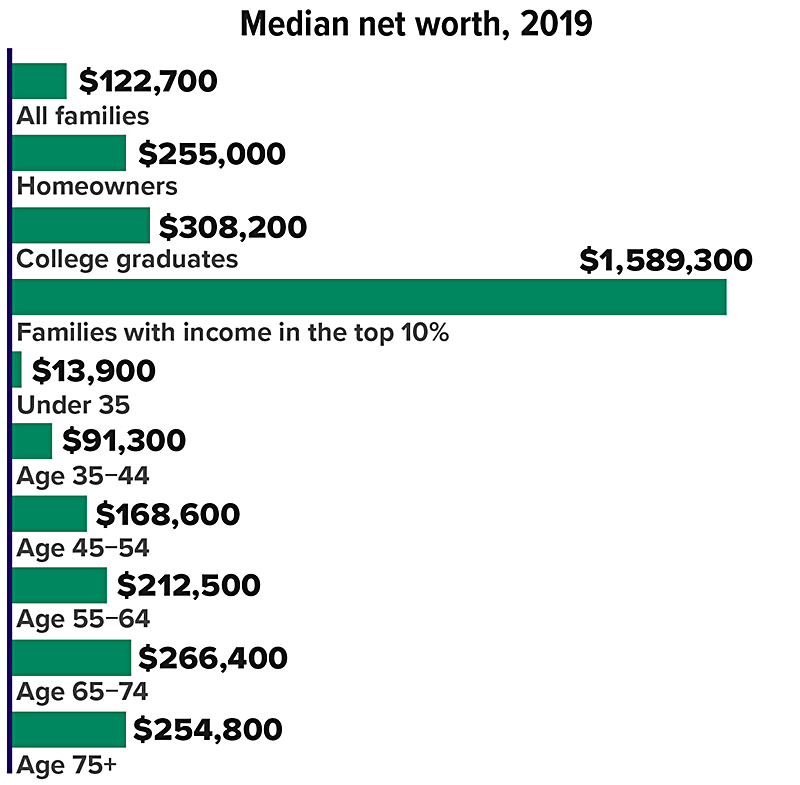
Wealth Snapshot

The net worth of U.S. families varies greatly depending on housing status, education, and income level. But it also takes time to build wealth, so there are significant differences by age.
Pay Attention to Your Spending

It’s virtually impossible to increase your net worth if you don’t live within your means. After studying long hours and working your way into a good-paying job, you may feel that you deserve to spend some money on fashionable clothes, the latest smartphone, a night on the town, or a relaxing vacation. However, if you can’t pay for most of your splurges without relying on credit — or wiping out your savings — then you may need to rein in your lifestyle. Budgeting software and/or smartphone apps can help you analyze your spending patterns and track your financial progress.

Utilize a Workplace Retirement Plan

Making regular pre-tax contributions to a traditional 401(k) plan is a no-nonsense way to accumulate retirement assets, and it helps reduce your taxable income by the same amount. Experts recommend saving at least 10% of your income for future needs, but if that’s not possible right away, start by contributing 3% to 6% of your salary to your retirement plan and elect to escalate your contribution level by 1% each year until you reach your target (or the contribution limit). The maximum you can contribute to a 401(k) plan in 2022 is $20,500 ($27,000 if you are age 50 or older).

Many companies will match part of employee contributions, and free money is a great reason to save at least enough to receive a full company match and any available profit sharing. Some plans may require that you remain employed by the company for a certain amount of time before you can keep the matching funds.

Assess Your Housing Situation

Paying rent indefinitely may do little to improve your financial situation. Buying a home with a fixed-rate mortgage could help stabilize your housing costs, and you can build equity in the property over time as your loan balance is paid off — especially if the value appreciates. A home purchase may also afford tax advantages, but only if you itemize rather than claim the standard deduction on your tax return. Interest paid on up to $750,000 of mortgage loan debt is deductible, as are the property taxes, subject to a $10,000 cap on state and local property taxes.

Homeownership is a worthwhile financial goal if you plan to stay put for at least several years. And in many places, owning a home can be less expensive than renting, thanks to low interest rates. But there could be hurdles to overcome, including a hot real estate market, high prices, lingering student debt, and the large chunk of money required for a down payment.

When shopping for a home, resist the temptation to buy more house than you can afford, even if the bank says you can. And don’t forget to factor property taxes, insurance, and potential maintenance costs into your buying decisions and household budget.

Prepared by Broadridge Advisor Solutions Copyright 2022.

Written by · Categorized: Uncategorized

What a Relief! Congress Acts Against Surprise Medical Bills

If you have ever been caught off-guard by a large medical bill, a long-running practice known as balance billing might be the reason. A balance bill — which is the difference between an out-of-network provider’s normal charges for a service and a lower rate reimbursed by insurance — can amount to thousands of dollars.

Many consumers are already aware that it usually costs less to seek care from in-network health providers, but that’s not always possible in an emergency. Complicating matters, some hospitals and urgent-care facilities rely on physicians, ambulances, and laboratories that are not in the same network. In fact, a recent survey found that 18% of emergency room visits resulted in at least one surprise bill.1

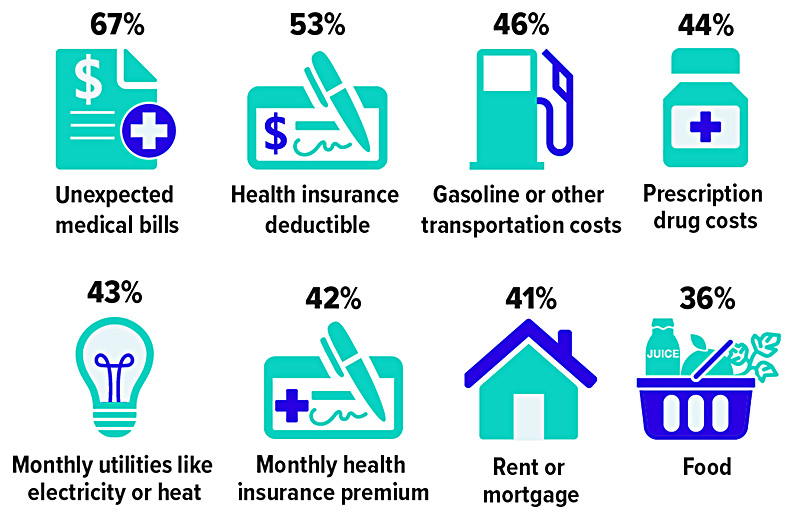
Who’s Afraid of High Health-Care Costs? Most People

Percent of surveyed adults who say they are worried about being able to afford the following expenses

Coming Soon: Comprehensive Protection

The No Surprises Act was included in the omnibus spending bill enacted by the federal government at the end of 2020. The new rules will help ensure that consumers do not receive unexpected bills from out-of-network providers they didn’t choose or had no control over. Once the new law takes effect in 2022, patients will not receive balance bills for emergency care, or for nonemergency care at in-network hospitals, when they are unknowingly treated by out-of-network providers. (A few states already have laws that prevent balance billing unless the patient agrees to costlier out-of-network care ahead of time.)

Patients will be responsible only for the deductibles and copayment amounts that they would owe under the in-network terms of their insurance plans. Instead of charging patients, health providers will negotiate a fair price with insurers (and settle disputes with arbitration). This change applies to doctors, hospitals, and air ambulances — but not ground ambulances.

Consent to Pay More

Some patients purposely seek care from out-of-network health providers, such as a trusted family physician or a highly regarded specialist, when they believe the quality of care is worth the extra cost. In these nonemergency situations, physicians can still balance bill their patients. However, a good-faith cost estimate must be provided, and a consent form must be signed by the patient, at least 72 hours before treatment. Some types of providers are barred from seeking consent to balance bill for their services, including anesthesiologists, radiologists, pathologists, neonatologists, assistant surgeons, and laboratories.

Big Bills Will Keep Coming

The fact that millions of consumers could be saved from surprise medical bills is something to celebrate. Still, many people may struggle to cover their out-of-pocket health expenses, in some cases because they are uninsured, or simply due to high plan deductibles or rising costs in general. Covered workers enrolled in family coverage contributed $5,588, on average, toward the cost of premiums in 2020, with deductibles ranging from $2,700 to more than $4,500, depending on the type of plan.2

When arranging nonemergency surgery or other costly treatment, you may want to take your time choosing a doctor and a facility because charges can vary widely. Don’t hesitate to ask for detailed estimates and try to negotiate a better price.

If you receive a bill that is higher than expected, don’t assume it is set in stone. Check hospital bills closely for errors, check billing codes, and dispute charges that you think insurance should cover. If all else fails, offer to settle your account at a discount.1-2) Kaiser Family Foundation, 2020

Prepared by Broadridge Advisor Solutions Copyright 2022.
Written by · Categorized: Uncategorized

Four Basic Principles of Financial Literacy

It is widely recognized that financial literacy impacts a person’s overall economic success. In fact, studies have shown that individuals who are exposed to economic and financial education at an early age are more likely to exhibit positive financial behaviors when they are older (e.g., maintaining high credit scores, accumulating wealth). As a result, many states are requiring high school students to take a course in either economics or personal finance before they graduate.1

Whether you are just starting out and beginning to manage your own finances or simply want to stay on top of your current financial situation, it’s important to always keep these basic principles of financial literacy in mind.

1. Create a budget and stick with it. A budget helps you stay on track with your finances. Start by identifying your income and expenses. Next, compare the two totals to make sure you are spending less than you earn. Hopefully, your budget is still on the right track. If you find that your expenses outweigh your income, you’ll need to make some adjustments. Finally, while straying from your budget from time to time is normal, once you have a solid budget in place it’s important to try to stick with it.

2. Set financial goals. Setting goals is an important part of life, particularly when it comes to your finances. Short-term goals may include saving for a new car or building an emergency fund, while long-term goals may take more time to achieve (e.g., saving for a child’s education or retirement). Over time, your personal or financial circumstances will most likely change, so you’ll need to be ready to make adjustments and reprioritize your goals as needed.

3. Manage your credit and debt. Reducing debt is part of any healthy financial plan. Whether you have student loan debt, an auto loan, and/or a credit-card balance, you’ll want to pay it down as quickly as possible. Start by tracking all of your balances while being mindful of interest rates and hidden fees. Next, optimize your repayments by paying off any high-interest debt first and/or taking advantage of a debt consolidation/refinancing program.

4. Protect yourself. When it comes to insurance coverage, are you adequately protected? Having the appropriate amount of insurance to help protect yourself against possible losses is an important part of any financial strategy. Your insurance needs will depend on your individual circumstances and can change over time. As a result, you’ll want to make sure your coverage properly aligns with your income and family/personal circumstances.

12020 Survey of the States, Council for Economic Education

Prepared by Broadridge Advisor Solutions Copyright 2022.

Written by · Categorized: Uncategorized

COVID-19 Left the U.S. Travel Industry Reeling

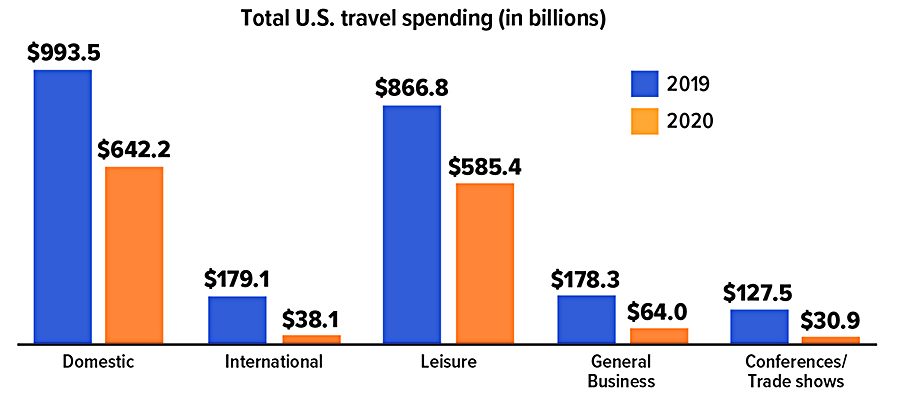
The pandemic hit the travel industry especially hard during 2020.

The U.S. travel industry’s total economic output plummeted 42% in 2020. A full 65% of all jobs lost in the United States were those supported by the travel industry. Perhaps unsurprisingly, the hardest-hit areas were business travel, particularly spending related to conferences, conventions, and trade shows, as well as international travel.

Federal, state, and local government coffers were also strained, as travel-related taxes fell by 34%.

Total travel spending in the United States, accounting for both domestic and international travelers, is expected to rise by 23.6% in 2021.

Prepared by Broadridge Advisor Solutions Copyright 2021.

Written by · Categorized: Uncategorized

Stock Market Risks in the Spotlight

During March 2021, the widening availability of COVID-19 vaccinations, signs of improving economic conditions, and a third, $1.9 trillion stimulus package brought about more optimistic growth projections. Even though a healthy economy could be good news for many businesses and the financial markets, rising inflation expectations caused a multi-week sell-off in U.S. government bonds that pushed up longer-term yields and sent the Nasdaq Composite Index into correction territory on March 8, 2021.1

Promising a patient approach, the Federal Reserve stated that it would not raise interest rates until the labor market fully recovers and inflation moderately exceeds the 2% target for some time.2 But some investors worry that sharply higher inflation could force policymakers to boost rates sooner than originally expected.

Here’s a closer look at some specific types of investment risk that could influence individual stock prices and/or cause broader market swings during the second half of 2021.

Inflation and Interest-Rate Fears

Inflation and interest rates are two different but closely related investment risks. The Federal Reserve is tasked with fostering full employment and controlling inflation. One way it balances these two goals is by lowering interest rates to stimulate business activity or raising rates to help slow inflation when the economy is heating up too fast.

High inflation erodes the value of investment returns, but when interest rates rise, bond values fall (and vice versa). These risks are obvious considerations for bond owners, but they also impact stocks. When goods, services, and credit cost more, consumers have less purchasing power, which can hurt company earnings and stock prices as well.

Rising bond yields might continue to have a negative effect on stock values, because as they move up, borrowing costs for most businesses also rise, cutting into profits. Higher yields could also entice risk-averse investors to sell their stocks and buy more stable bonds instead.

Legislative or Regulatory Impacts

Some government actions (such as antitrust lawsuits, higher taxes, and more stringent regulations or standards) make it more difficult and expensive for companies to do business, which can adversely affect their earnings and stock prices. On the other hand, government subsidies and tariffs on foreign products can provide competitive advantages.

The Justice Department, Federal Trade Commission, and numerous states are in the midst of antitrust lawsuits or major investigations into the business practices of several market-dominating tech companies.3 In another example, the Securities and Exchange Commission is considering new standards for corporate disclosures related to environmental, social, and governance risks.4

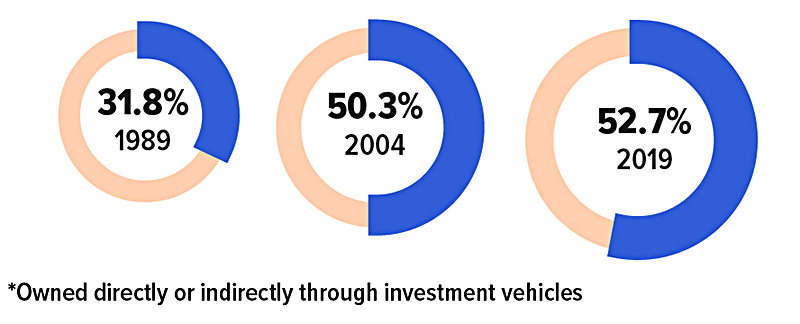
Percentage of U.S. Households Who Own Stocks*

Event or Headline-Driven Volatility

Headline risk refers to the possibility that events reported in the media could hurt a company’s reputation and/or earnings prospects. Troubling news can cause market backlash against a specific company or an entire industry. Companies try to manage this risk through public relations campaigns and other efforts to generate positive news that leaves a good impression on consumers. Events that threaten to disrupt business activity nationwide, regionally, or around the world can cause sudden stock market declines.

The market responds to news, good or bad, almost every day. For this reason, your portfolio should be designed to weather a range of market conditions and have a risk profile that reflects your ability to endure periods of market volatility, both financially and emotionally.

The principal value of bonds may fluctuate with changes in interest rates and market conditions. Bonds redeemed prior to maturity may be worth more or less than their original cost. The return and principal value of stocks fluctuate with changes in market conditions. Shares, when sold, may be worth more or less than their original cost. Investments seeking to achieve higher yields also involve a higher degree of risk.1) The Wall Street Journal, March 8, 2021
2) Federal Reserve, March 17, 2021
3) Reuters, December 16, 2020
4) The Wall Street Journal, February 24, 2021

Prepared by Broadridge Advisor Solutions Copyright 2021.

Written by · Categorized: Uncategorized

  • « Go to Previous Page
  • Page 1
  • Interim pages omitted …
  • Page 4
  • Page 5
  • Page 6
  • Page 7
  • Go to Next Page »
  • Contact Us
  • Cameron Enterprises
  • Legal and Privacy Notices